Google Just Replaced the Lead Form With a Chatbot. Here's What It Means for Your Cost-Per-Lead
Google's Business Agent for Leads swaps the static form for a Gemini chatbot. See what it does to your cost-per-lead, plus 3 catches to fix first.
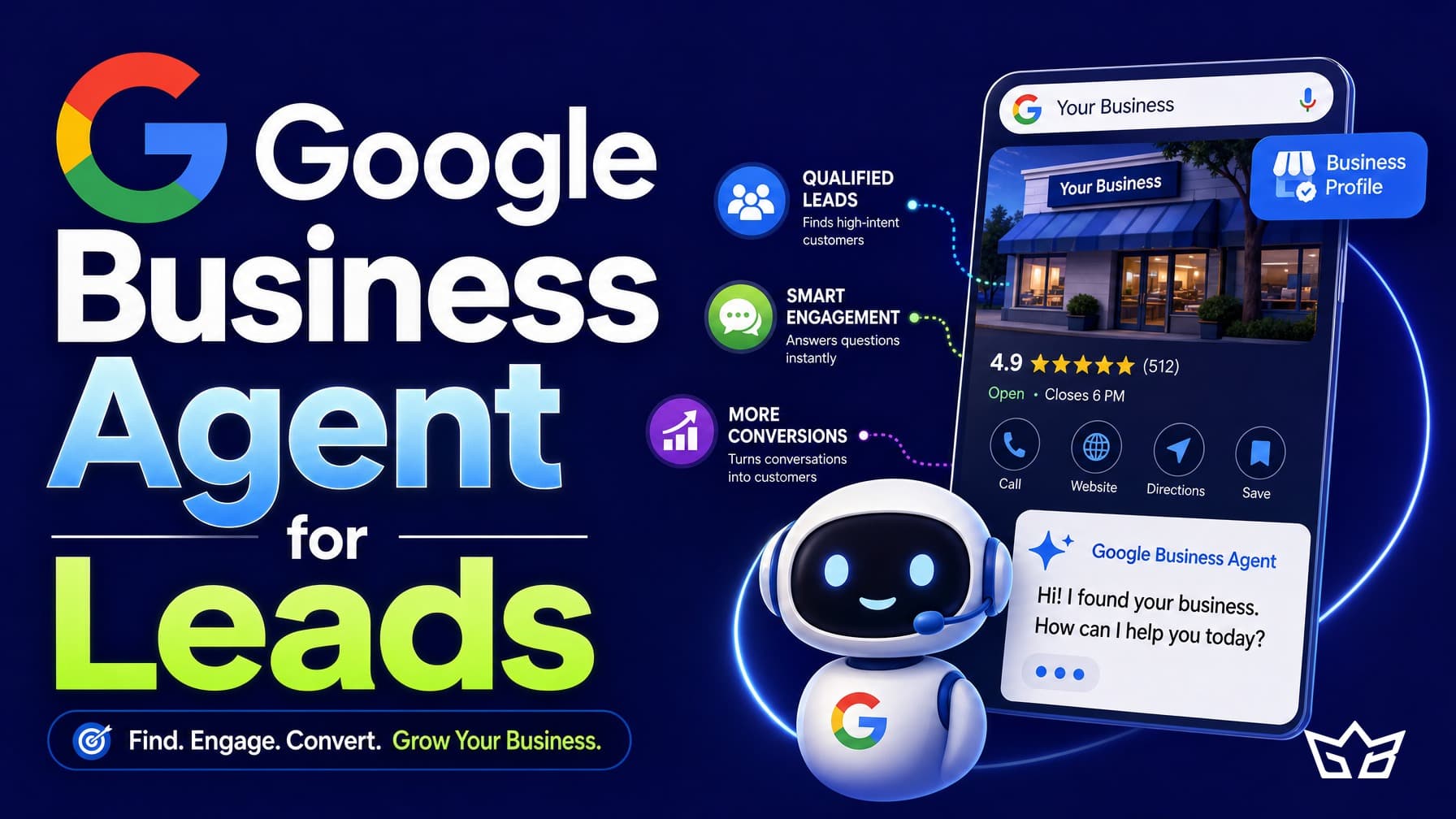
On May 20 at Google Marketing Live, Google quietly did something it has been threatening to do for years: it killed the static lead form. In its place sits Business Agent for Leads, a Gemini chat agent that lives inside your Search ad, talks to your prospect, answers their questions from your website, and only fires a pre-filled form once the conversation decides they are worth capturing. The form you have been optimizing since 2015 is now the fallback, not the front door.
If you run any kind of lead generation through Google, this changes the math on your cost-per-lead, and not in the direction you might assume. Here is what it actually does, why Google really built it, and the three things that will quietly wreck your results if you turn it on unprepared.
What Business Agent for Leads actually does
Picture your ad showing up in Google's AI Mode. Next to it, there is now a "Chat" button. A prospect clicks it and starts typing questions the way they would text a friend who happens to run your business. "Do you install in Mississauga?" "What's the lead time on a kitchen reno?" "Do you finance?"
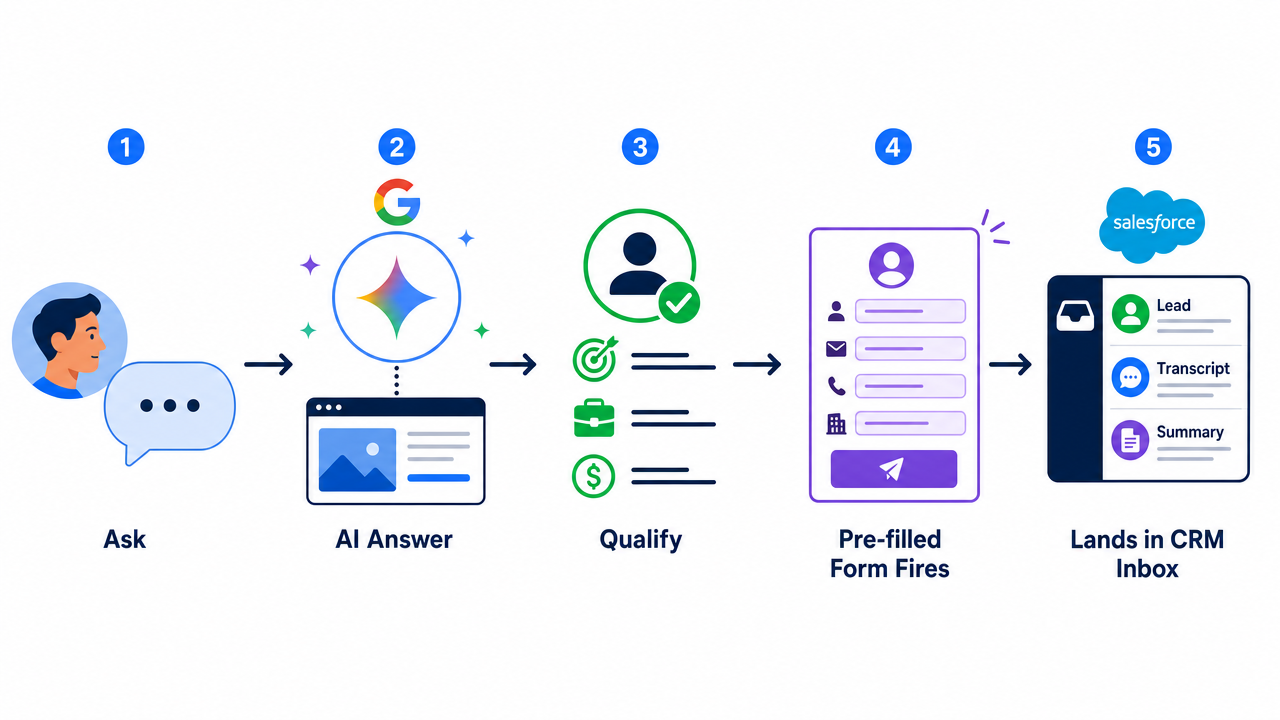
Gemini answers each one by pulling from your website content, so the responses sound like you and stay accurate. It runs the whole conversation, and somewhere in the middle, once the prospect has shown real intent, it slides in a pre-filled form to grab their contact details. The lead lands in your account with three things attached:
- A standard lead row, same as before
- The full conversation transcript
- A Gemini-generated summary of the qualifying signals, so your sales rep knows the person asked about financing and wants a July install before they ever pick up the phone
It runs 24/7, so the lead who finds you at 11pm on a Sunday gets a real answer instead of a contact form and a two-day wait. It is in open beta for US advertisers right now, and Google tested it first in education, automotive, and real estate, three verticals where buyers ask a lot of questions before they commit.
One catch you need to know upfront: it only runs on AI Max for Search or Performance Max campaigns with text customization turned on. Hold that thought, because it matters more than the shiny chat feature.
The real reason Google built this (it's not for you)
Google's public line is "better quality, high-intent prospects." That is true, but it is the side effect, not the motive.
Here is the thing nobody at Google Marketing Live said out loud. Lead gen has always been the ugly stepchild of Google's ad machine because it does not produce enough clean, structured data for the algorithm to learn from. A form fill is a single, thin event. The algorithm sees "someone submitted a form" and almost nothing else. Compare that to ecommerce, where every purchase feeds back product, price, margin, and repeat-buyer signals. That data gap is why your lead gen campaigns have always felt dumber than your shopping campaigns.
Business Agent solves Google's problem first. Every conversation is a firehose of micro-signals: what people ask, where they hesitate, what makes them convert, what makes them bail. That is exactly the structured training data Google's models have been starving for. You are not just getting an assistant. You are volunteering to build Google's lead-gen dataset, and the better leads are your cut of the deal.
I am not saying that cynically. It is a fair trade for a lot of businesses. But you should walk in knowing what the exchange actually is, because it explains every design decision, including the ones that cost you.
Why a chatbot beats your form (the numbers are lopsided)
The skeptic's reaction is fair: is a conversation really better than a form, or is this just Google repackaging a gimmick? The conversion data across the industry is not close.
Broken out by business type, the pattern holds. B2B SaaS sees chatbot conversion around 8 to 15% against 2 to 4% for forms. Service businesses like real estate, legal, and healthcare see 10 to 18% versus 2 to 5% for a static form. Across a study spanning 12 industries, conversational capture converted 3 to 4 times better than forms, and businesses that made the switch reported roughly a 23% lift in conversion rate.
The reason is not magic. A form asks for everything at once and makes a stranger commit before you have earned it. A conversation asks one question at a time, answers the prospect's questions first, and builds enough trust that handing over a phone number feels like the natural next step instead of a leap of faith. If you have ever wondered why your website isn't converting, the front-loaded form is usually part of the answer.
So yes, on raw conversion, this should win. The problem is that conversion rate is not cost-per-lead, and cost-per-lead is not revenue. That is where the catches live.
The three catches nobody's putting in the headline
1. The Performance Max tax
You cannot run Business Agent on a clean, tightly controlled Search campaign. It only deploys through Performance Max or AI Max for Search. That means to get the good chatbot, you have to hand Google the keys to the algorithmic black box that has burned more lead-gen budgets than any feature in the last five years.
We have watched clients pour money into PMax and get back a pile of leads that look great in the dashboard and never answer the phone. The conversation quality can be excellent while the targeting underneath it is still spraying budget across placements you would never choose. Before you touch Business Agent, get your feeding signals right. This is the same discipline we lay out in our guide to Performance Max for B2B lead gen: if you optimize for form fills, you get form fills, so you have to teach the algorithm what a real, closed customer looks like, not just a submission.
2. The site content bottleneck
Gemini grounds every answer in your website. That is the safety feature that stops it from hallucinating a price or promising a service you do not offer. It is also a brutal mirror.
If your site is thin, vague, or five years out of date, your chatbot will be thin, vague, and out of date, in real time, in front of a buyer who is ready to spend. The agent cannot answer "do you offer weekend installs?" if that answer lives only in your head. A prospect who hits three "I'm not sure about that" responses is gone.
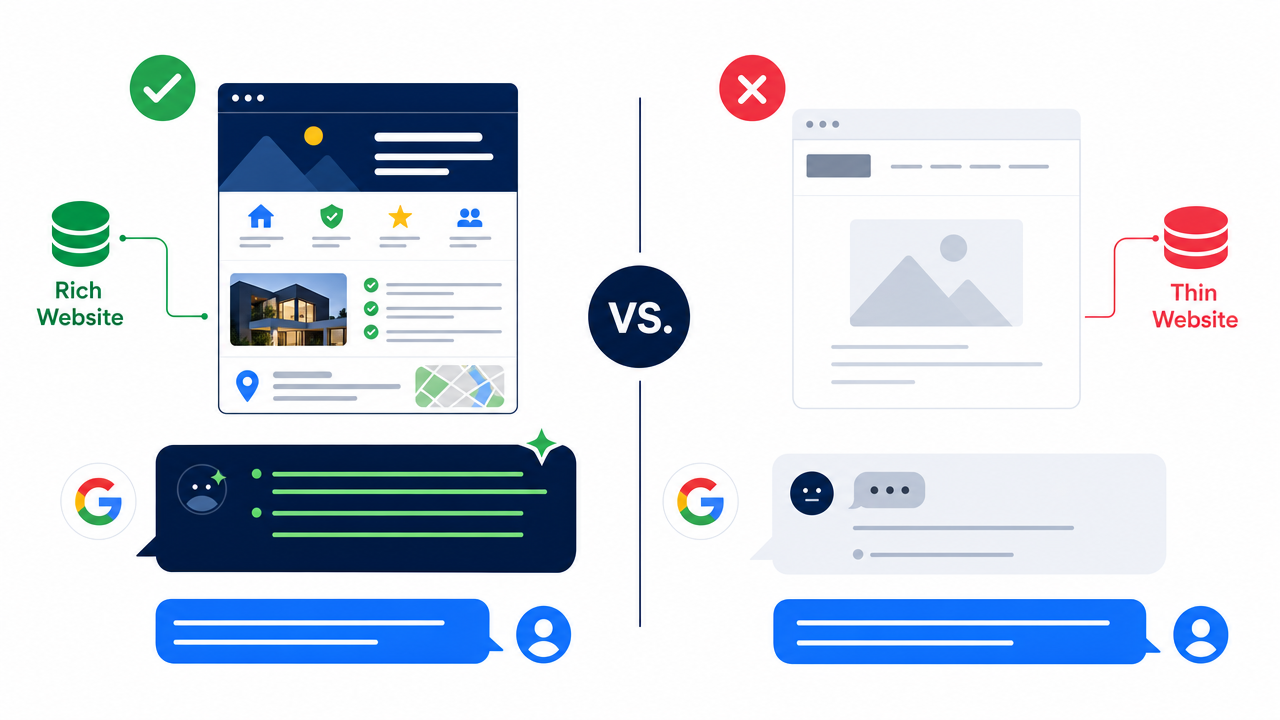
This flips an old assumption. Your website used to be the thing that convinced a human. Now it is also the knowledge base that powers the machine talking to that human. Content depth just became a paid-ads performance lever, which is the same shift we have been describing in answer engine optimization: the businesses with the most complete, specific, genuinely helpful content win, because that is what the AI has to work with.
3. The CRM gap
Business Agent hands you a transcript and a qualifying summary. That is gold, but only if it reaches the human who calls the lead. If those conversation histories do not flow into your CRM, your sales rep opens the lead blind and asks the prospect the exact three questions they already answered the bot two minutes ago. Now you look disorganized, the prospect feels unheard, and the entire trust advantage you just paid for evaporates on the first call.
The fix is not complicated, but it is not automatic either. You need the plumbing that carries the transcript from Google into the record your rep opens. If you have a real CRM, this is a straightforward integration. If you are still running leads out of a shared inbox and a spreadsheet, fix that before you turn any of this on.
Who should turn it on now, and who should wait
Not every business is ready for this today. A quick gut check:
- Turn it on now if you are in a high-consideration vertical (home services, real estate, healthcare, education, B2B services), your website is deep and detailed, and your leads flow into a CRM your sales team actually uses.
- Wait a beat if your site is thin or outdated, your PMax campaigns are already leaking budget, or your lead follow-up is held together with sticky notes. The chatbot will amplify whatever system it sits on top of, good or bad.
The businesses that win the next 18 months of lead gen will not be the ones who adopted first. They will be the ones who adopted with the plumbing already in place.
What to do this week
You do not need to flip the switch tomorrow. You need to get ready so that when you do, it prints money instead of noise.
- Audit your website against real buyer questions. Pull the last 30 sales calls or emails and list every question prospects actually asked. Now check: does your site answer each one clearly? Every gap is a place your chatbot will stumble. Fill them.
- Fix your PMax feeding signals. Make sure you are optimizing for qualified leads or closed revenue, not raw form fills. Import offline conversions so Google learns what a good lead becomes, not just that a lead happened.
- Confirm the CRM handoff. Map exactly how a Google conversation transcript will land in the record your rep opens. If the answer is "it won't," that is your first project.
- Brief your sales team. Tell them leads will now arrive with a transcript and a summary, and that step one on every call is reading it. A rep who opens with "I saw you asked about weekend installs" closes at a different rate than one who starts cold.
- Start a small beta. Turn it on for one campaign, watch cost-per-qualified-lead (not cost-per-lead), and compare it against your form-based control before you scale.
The bottom line
Google did not replace your lead form because it loves you. It did it because your form was starving its algorithm, and a conversation feeds the machine while handing you better leads as the byproduct. That is a genuinely good deal, as long as you show up with a detailed website, clean campaign signals, and a CRM that catches what the bot hands off.
Show up without those, and you will pay Performance Max prices for a smarter way to generate leads you still cannot close.
This is exactly the kind of system we build for clients: the website depth, the ad-account signals, and the automation plumbing that make features like this actually pay off instead of just looking good in a case study. If you want a second set of eyes on whether your lead-gen stack is ready for Google's agentic shift, book a call and bring your current cost-per-lead. We will tell you where the leaks are before you spend another dollar chasing the shiny new form.
Reviewed by Gabriel Narsaik under our editorial policy.