How to Get ChatGPT to Recommend Your Product
AI visitors convert up to 23x better than organic. Here's how to get ChatGPT to recommend your product, from the audit to the citations it reads.
Ahrefs published a number last year that should have changed how every marketing team spends its time. AI search sent them just 0.5% of their traffic. That same 0.5% drove 12.1% of all their signups. Run the math and AI visitors converted roughly 23 times better than everyone arriving from traditional organic search. Which is why figuring out how to get ChatGPT to recommend your product has quietly become one of the highest-leverage jobs in marketing, and one almost nobody is doing on purpose.
Semrush put the cross-industry figure at 4.4x. Shopify reported in May that AI-referred sessions convert nearly 50% better than organic search on product pages, and that AI beat organic in 23 of 25 merchant categories. So the question stops being whether this channel matters at a rounding-error traffic volume, and becomes something sharper: when a buyer asks ChatGPT to recommend a product like yours, does your name come out of its mouth?
For most brands it doesn't. And the reason it doesn't is the part people get wrong.
ChatGPT Isn't Ranking You. It's Repeating What Other People Said About You.
Google reads your website and decides where you belong. ChatGPT does something closer to remembering. Its sense of which brands are credible in your category was formed by absorbing patterns from the open web, then topped up at answer time by whatever it can retrieve and verify.
That difference has a brutal consequence. You cannot write your way onto the recommendation list from your own domain. Your homepage claiming you're the best project management tool for agencies carries almost no weight, because every competitor's homepage says the same thing and the model has learned to discount it.
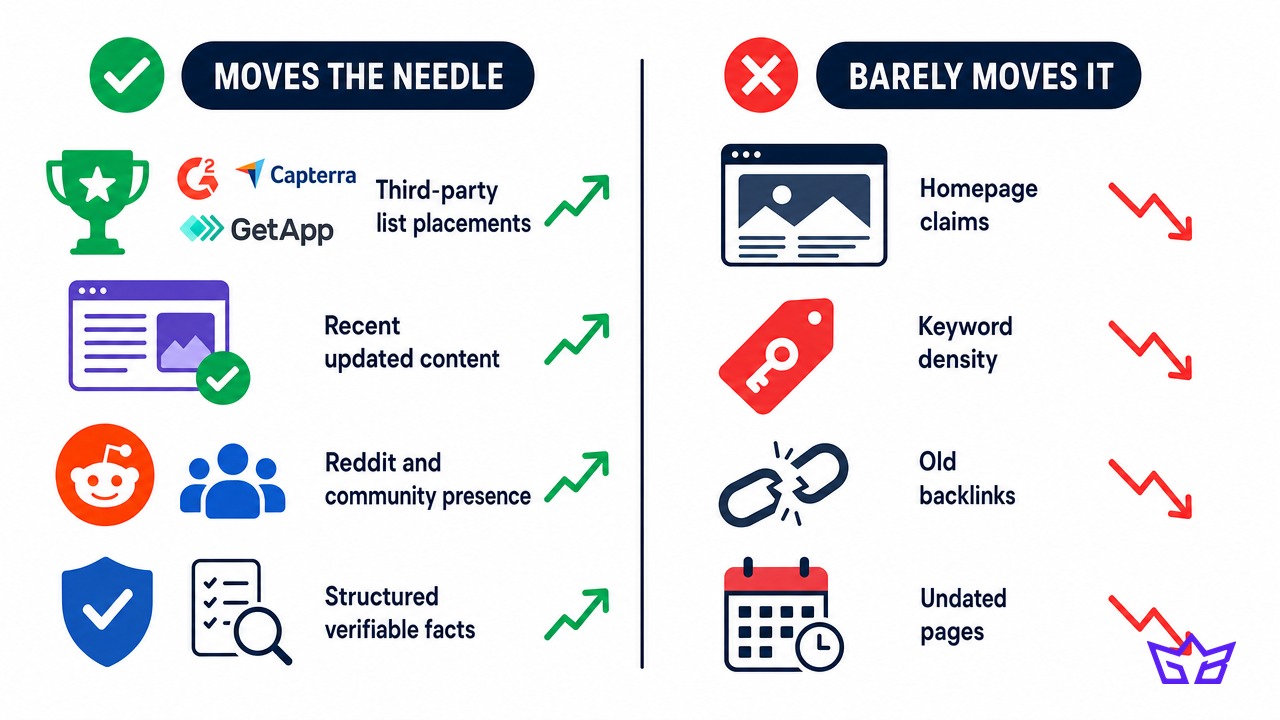
What does carry weight is other people saying it. Research into ChatGPT's brand selection published this year found roughly 41% of its recommendations trace back to authoritative list placements: industry roundups, "best of" compilations, Wikipedia, editorial rankings. Not backlinks. Not keyword density. Placements. Being named, by someone else, in a list a machine trusts.
The second finding matters just as much. Around 71% of citations came from content published within the last three years. Freshness outranks authority accumulated over a decade. A two-year-old roundup that includes you beats a fifteen-year-old domain that doesn't.
Step One: Find Out What It Says About You Right Now
Almost nobody checks what ChatGPT currently says about them before they start optimizing, which is like buying ad creative before you've checked what your cost per lead is.
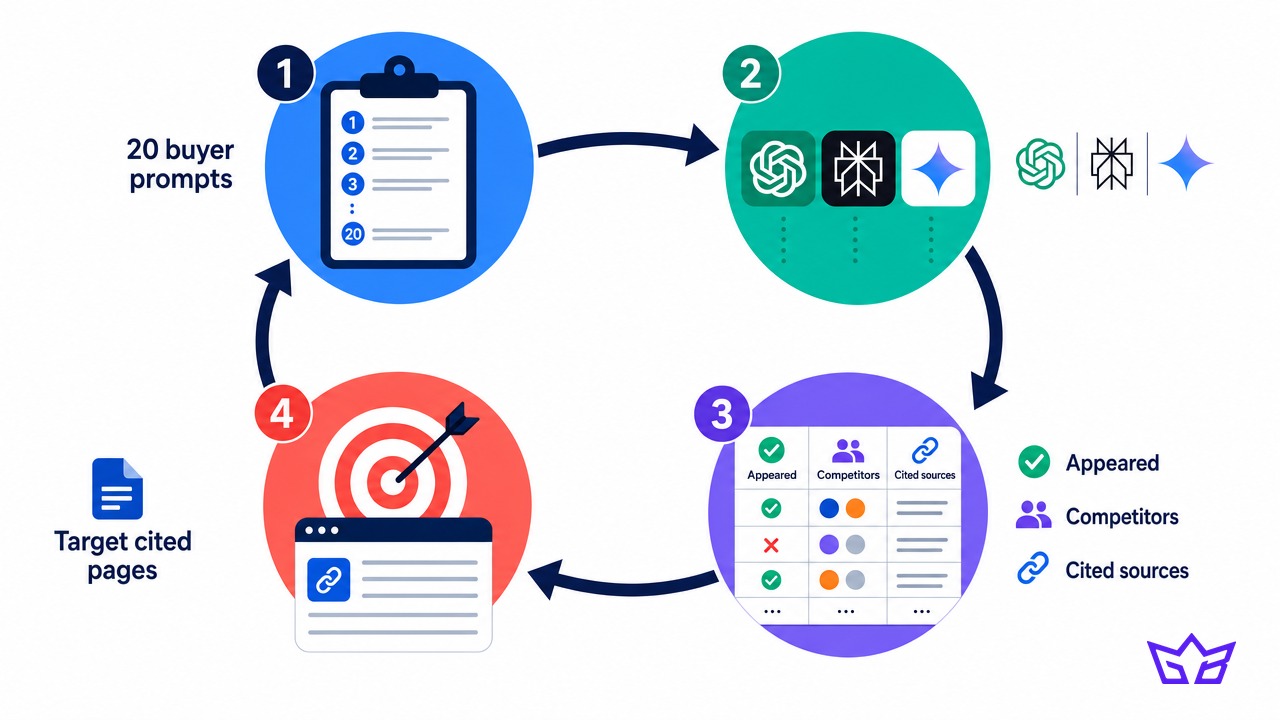
Build a prompt set. Twenty questions a real buyer would type, written the way a buyer talks, not the way you'd write a keyword:
- "Best CRM for a 12 person real estate team"
- "Who should I hire for landscaping in Oakville"
- "Alternatives to [your biggest competitor]"
- "Cheapest way to get professional product photos in Toronto"
- "Is [your brand] any good"
Run every one in ChatGPT, then again in Perplexity and Gemini, and log three things per prompt: whether you appeared, who appeared instead, and which sources were cited. Do it in a fresh session with memory and personalization off, or you'll get answers shaped by your own history and conclude you're doing better than you are.
That log is your baseline. It tells you which prompts you're invisible for, which competitors own the category, and, most usefully, exactly which pages are feeding the model its opinion. Those cited pages are your target list.
The Third-Party Footprint Is the Whole Game
Once you know which pages get cited, the work becomes unglamorous and specific: get yourself into them.
Pitch the roundups that already rank. Search the exact phrases from your prompt set. The "12 best X for Y" articles that come back are the ones already feeding the model. Most are maintained by small publishers or solo operators who update them regularly and will happily consider a genuine addition, especially if you hand them something the piece is missing: a real price, a screenshot, a differentiator their current entries lack.
Get on the comparison and directory pages that matter in your category. G2 and Capterra for software. Houzz for trades. Clutch for agencies. These sites are structured, updated, and heavily crawled, which makes them cheap fuel for a model that wants a verifiable claim.
Earn one or two real editorial mentions a year. A trade publication naming you in a piece about your sector is worth more than a hundred directory listings, because it's the kind of source that shows up when the model needs to justify a recommendation.
Publish the comparison nobody else will write. An honest page comparing you against your three main competitors, including where you lose, gets cited because it answers the question directly. Brands avoid these out of fear. That's exactly why the slot is open.
None of this is fast. All of it compounds, and unlike an ad, a placement keeps paying after you stop working on it.
Reddit Is the Most-Cited Domain in AI Answers, and Most Brands Handle It Backwards
Reddit now accounts for roughly 40% of all LLM citations across generative engines, outpacing Wikipedia and YouTube. ChatGPT cites it in more than 5% of responses, Perplexity leans on it far harder, and Tinuiti's Q1 report found Reddit's citation share grew at least 73% in commercial categories like technology and electronics. Conductor's data shows sole-source citations, where Reddit is the only thing the model quotes, up 31% since late 2025.
So when someone asks ChatGPT which of two products to buy, there's a meaningful chance the answer is a paraphrase of a Reddit thread.
The wrong response is to astroturf. Reddit's moderators are ruthless, brand-new accounts posting recommendations get removed within hours, and a caught attempt can leave a permanent negative thread that the model will happily cite against you for years. That's a real downside risk, not a theoretical one.
The right response is slower and duller. Have someone senior, posting under a real identity that says who they work for, genuinely answer questions in the two or three subreddits where your buyers actually hang out. Answer the ones where your product isn't the right fit too, because that's what earns the credibility that makes the other answers count. You're not trying to plant a recommendation. You're trying to be a known, useful presence in a corpus the machines read.
Freshness Beats Authority You Earned in 2019
Given that roughly seven in ten citations come from recent content, a page that hasn't been touched in four years is close to invisible no matter how many links point at it.
Two practical habits fix most of this:
- Put visible dates on anything factual and actually update them. A page that says "updated August 2026" and contains 2026 numbers is a safer citation than an undated page, and models behave accordingly.
- Refresh your best five pages twice a year rather than publishing twenty new ones. Re-check every stat, replace anything stale, and note what changed. Refreshing what already gets cited beats adding pages nobody references.
Make the Claim Machine-Verifiable
Everything above gets you mentioned. This part stops you being quietly demoted once you are.
If you sell products, the model needs to be able to confirm the boring facts: price, availability, shipping, whether you're a real business. That's a feed and structured-data problem, and it's the half of this topic we covered separately in why ChatGPT recommends your competitor, including the pricing trap that silently pushes stores down the list. Read that one alongside this if you run an ecommerce catalogue, because the off-site work in this article and the feed work in that one fail without each other.
For service businesses, the equivalent is making sure your name, service area, and what you actually do are stated identically everywhere a machine can check, and that your site says it in plain language rather than in a hero video. The mechanics of that sit inside answer engine optimization, and the strategic difference between chasing AI answers and chasing rankings is worth understanding before you allocate budget, which is the argument in GEO vs SEO.
What to Measure, and What Not To
You can now buy tools for this. Otterly, SE Ranking, Frase and Siftly all run a fixed prompt set on a schedule and report whether you appeared, alongside which competitors did. They're worth the money once you're past the manual audit stage, mostly because they turn a vibe into a trend line.
Track two things and ignore the rest:
Share of voice on your prompt set. Of your twenty buyer prompts, in how many does ChatGPT name your brand at all? That number moving from 2 to 7 over a quarter is the only real evidence any of this worked.
AI-referred sessions and what they do. Segment your analytics by referrals from chatgpt.com, perplexity.ai and the rest, and watch conversion rate rather than volume. Volume will look insulting, under 1% of sessions for most sites. Conversion rate is where the 4.4x shows up, and it's what justifies the budget internally.
What not to measure: your own spot-checks in a logged-in ChatGPT window. Personalization makes them meaningless, and they'll tell you what you want to hear.
Frequently Asked Questions
Can you pay to get recommended by ChatGPT? Not for organic recommendations, no. There's no bid, no placement fee, and anyone selling you guaranteed inclusion is selling you nothing. OpenAI has been building out shopping and merchant surfaces, which are their own separate thing, but the recommendation you get in a normal conversation isn't for sale.
Does ChatGPT use Google rankings to decide? Not directly. Rankings and AI recommendations correlate because both reward being widely and credibly referenced, but you can rank page one and never get mentioned, and plenty of brands get recommended while sitting on page three. They're different systems with an overlapping input.
How long does this take? Expect a quarter before your prompt-set share of voice moves in any believable way, and longer for competitive categories. Placements have to be published and then absorbed. The audit itself takes an afternoon, which is why it's the right first move.
Do I need a product feed? If you sell physical products, yes, and it's arguably more urgent than anything in this article. If you sell services, the equivalent is consistent, verifiable business information and content that answers buyer questions in plain terms.
How do I check whether ChatGPT mentions my brand today? Open a fresh session with memory and personalization off, ask the five questions your best customers asked before they bought, and write down what comes back. That's the whole method, and it costs you ten minutes.
Where to Start This Week
Do the audit. Twenty prompts, three engines, one spreadsheet, memory off. You'll finish it in an afternoon and you'll know two things you don't know right now: which buyer questions you're invisible for, and which specific pages are telling the machines who to recommend instead of you.
Then pick the three cited pages you have a legitimate case to be included in, and make that case. Not a link request. A useful, specific pitch to a real editor with something their page is missing.
That's the entire opening move, and it's the one almost nobody makes, because auditing feels less like progress than publishing. It isn't. If you'd rather have someone run the audit and the placement work for you, that's part of what we do in AI and automation and SEO.
Reviewed by Keston Leader under our editorial policy.