Conversion Rate Optimization: A Practical Guide for 2026
Conversion rate optimization (CRO) is the practice of turning more of your existing visitors into customers by removing friction and testing changes, so you grow without paying for more traffic.
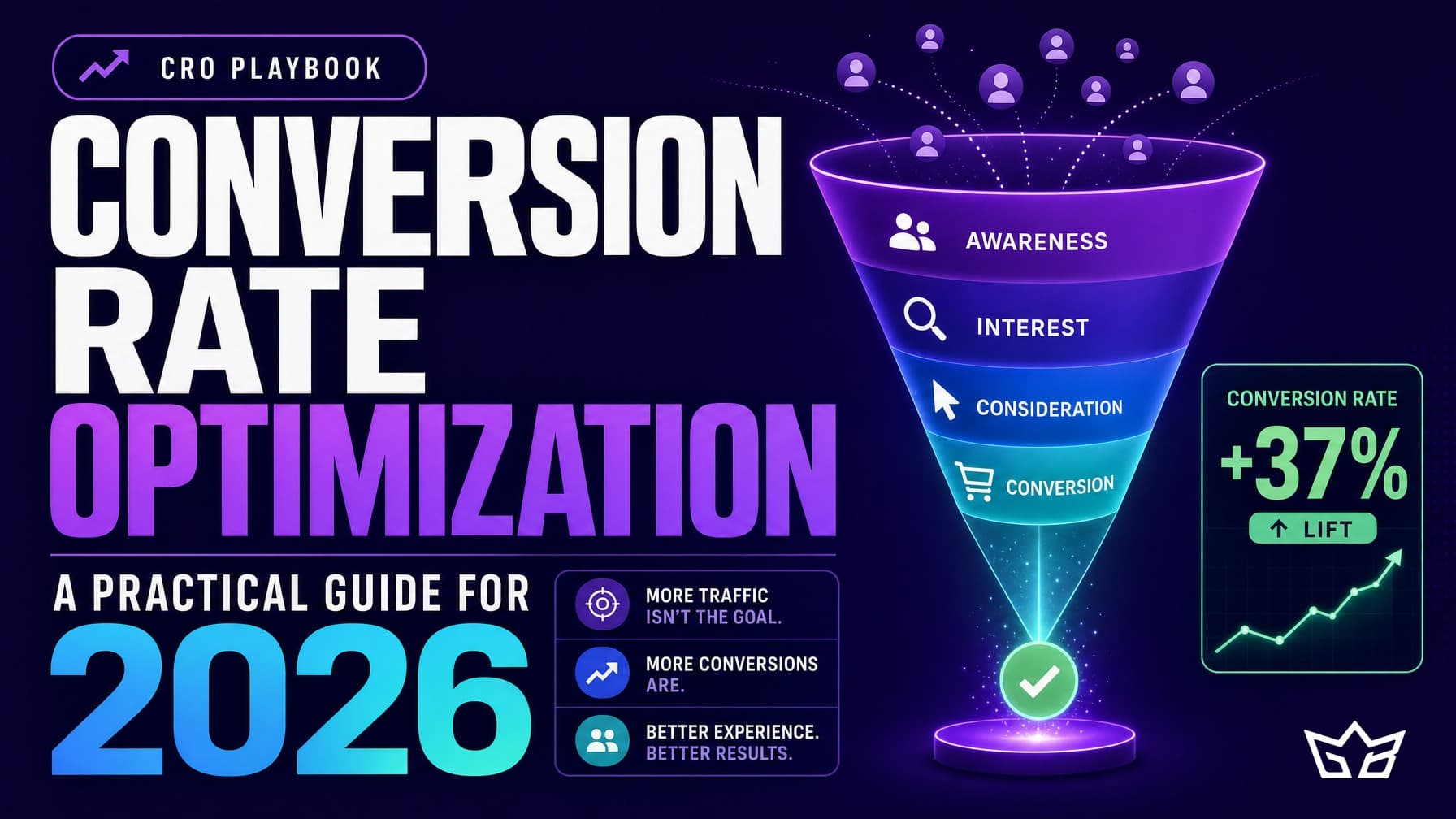
Conversion rate optimization (CRO) is the practice of increasing the share of visitors who take the action you want, whether that is buying, booking, or filling out a form, without paying for more traffic. In plain terms, conversion optimization means making the visitors you already have work harder by removing friction and testing changes that lift your website conversion.
Most businesses spend heavily to bring people to a site and then let a leaky page waste that spend. CRO is how you plug the leaks. Below is a practical guide to how conversion rate optimization works in 2026, what to test first, and the mistakes that cost you money.
What is conversion rate optimization?
Your conversion rate is the percentage of visitors who complete a goal. If 1,000 people visit and 20 buy, that is a 2 percent conversion rate. Conversion rate optimization is the ongoing work of raising that number through measurement, testing, and steady improvement. You can measure your current rate and model what a small lift is worth with our free Conversion Rate Calculator before you change anything.
CRO is not about tricks or dark patterns. It is about understanding why people hesitate and making the right action easier and more obvious.
Why CRO beats just buying more traffic
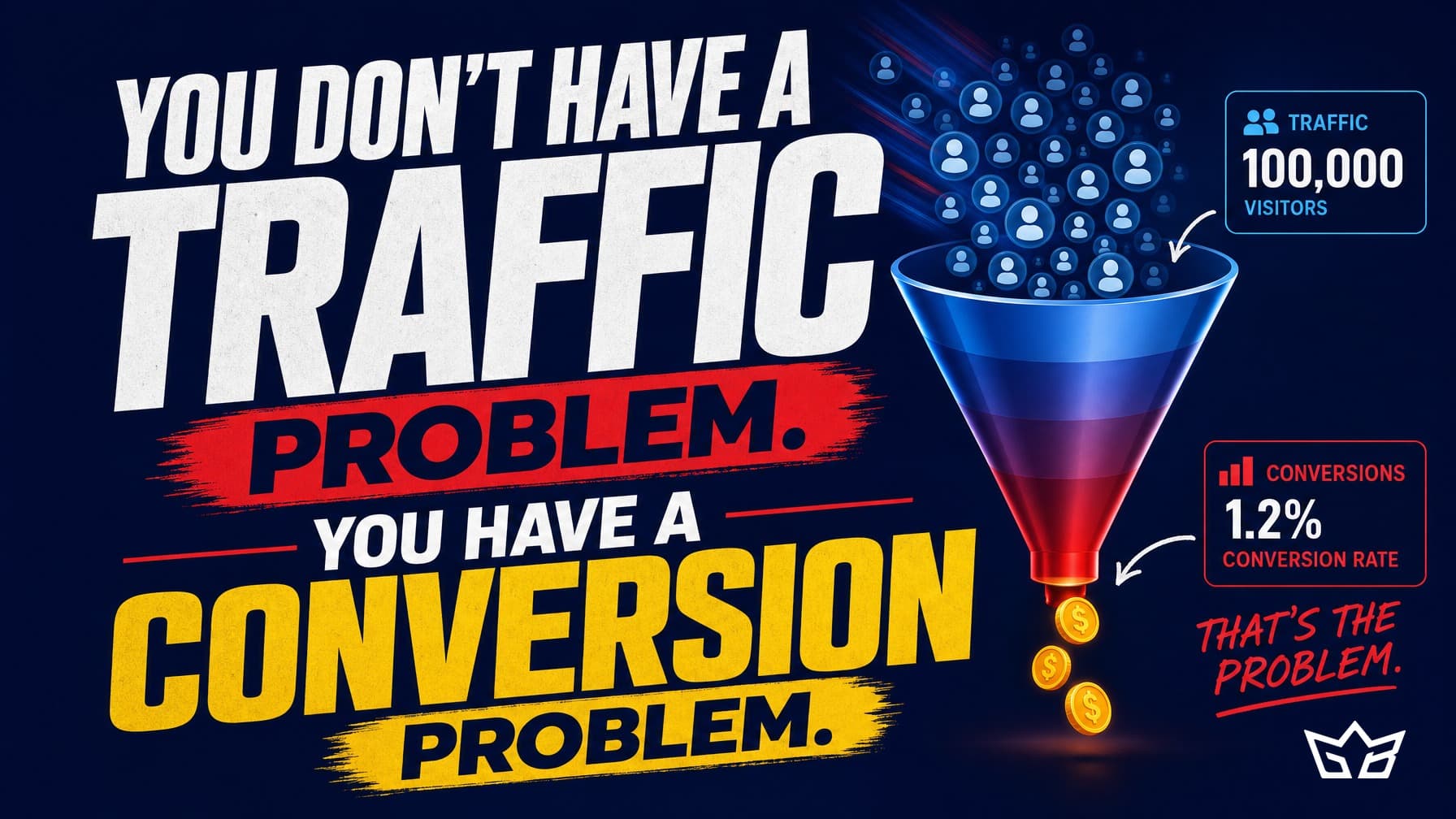
More traffic is the default reflex, but it is often the expensive way to grow. If your page converts at 2 percent, doubling your ad spend doubles your cost before it doubles your customers. Lifting the same page to 3 percent gives you 50 percent more customers from traffic you already pay for, and that gain compounds across every channel feeding the page.
Improve your conversion rate first and every dollar you spend on ads, SEO, and email gets more efficient. That is why CRO usually pays back faster than another traffic campaign.
There is a ceiling, of course. If a page is already tuned tightly, more traffic may be the right next move. But most sites are nowhere near that ceiling, and the cheaper win is sitting in the pages you already own.
The CRO process
Good conversion optimization follows a loop, not a hunch. The steps:
- Measure. Know your baseline rate by page, device, and source. You cannot improve what you have not counted.
- Find friction. Use analytics, session recordings, and real user feedback to see where people drop off.
- Form a hypothesis. Write it plainly: if we do X, then conversions will rise because Y.
- Test. Run an A/B test so the change earns its place with data, not opinion.
- Keep the winner. Ship what wins, discard what loses, and start the next test.
Each pass through the loop teaches you something about your buyers, even the tests that lose.
What to test first
Start where the traffic and the money already are. Testing a footer link nobody clicks wastes weeks. Prioritize:
- Your highest-traffic landing pages and product pages.
- The headline and the main offer above the fold.
- Your primary call-to-action: wording, colour, and placement.
- Forms: cut fields you do not need and shorten the steps to finish.
- Page speed and mobile layout, since most Canadian traffic is now on phones.
Test one clear change at a time so you actually know what caused the result. If a page has low traffic, changes can take weeks to reach a reliable read, so save those for later and start where you get answers fast.
Tools for CRO
You do not need a big stack to start. A workable set:
- Analytics: Google Analytics 4 to see where visitors drop off.
- Heatmaps and recordings: Hotjar or Microsoft Clarity, which is free, to watch real behaviour.
- Testing: a tool like VWO or Optimizely, or the split testing built into your platform.
- Surveys: a quick on-page poll asking why people did not buy.
The tool matters less than the discipline of running tests and reading them honestly.
Common CRO mistakes
Even experienced teams trip on the same things:
- Calling a test too early, before it has enough data to be reliable.
- Testing a button shade while the offer itself is the real problem.
- Running several changes at once, so you cannot tell what worked.
- Chasing a rate while ignoring lead quality or actual revenue.
- Copying a competitor blindly; their audience is not yours.
Most of these come from wanting a fast answer. The honest read is slower and more reliable.
CRO is a continuous loop, not a one-time fix
This is the part people skip. Conversion optimization is day-to-day work, not a one-month project you finish and forget. Your visitors change, your competitors change, and seasons shift buying behaviour, so a page that converts well this quarter can slide the next. Winners you shipped last year quietly decay, and if you stop testing the gains erode. Treat CRO as a standing habit: a steady cadence of measure, test, and keep the winner, month after month. For GTA and Canadian businesses competing for the same local buyers, that steady loop is often what separates the sites that grow from the ones that stall.
If you want help turning the traffic you already have into more customers, our marketing and growth team runs CRO as an ongoing program. Get in touch and we will start with your numbers.
Frequently asked questions
What is conversion rate optimization?
Conversion rate optimization (CRO) is the process of increasing the percentage of website visitors who take an action you want, such as buying or booking. It works through measurement, finding friction, and running tests. The goal is more customers from the same traffic.
What is a good conversion rate?
It depends on your industry and traffic source, but many websites sit around 2 to 3 percent for e-commerce and higher for warm leads or booking pages. Rather than chase a benchmark, focus on beating your own baseline. A steady rise quarter over quarter matters more than any single number.
How do I improve my conversion rate?
Start by measuring your current rate by page and device, then find where visitors drop off using analytics and session recordings. Form one clear hypothesis, run an A/B test, and keep the change only if it wins. Begin with your highest-traffic pages, your main offer, and your forms.
How much does CRO cost?
In Canada, expect roughly $1,500 to $5,000 CAD per month for an ongoing CRO program with an agency, depending on traffic and test volume. Tools like Microsoft Clarity are free, while testing platforms range from free tiers to several hundred dollars a month. Most of the cost is the time to run and read tests properly.
Is CRO a one-time project or ongoing?
It is ongoing. You can run a one-time audit for a few thousand dollars, but real gains come from a continuous loop of testing over 3 to 6 months and beyond. Visitor behaviour and competitors change, so if you stop testing your conversion rate tends to drift back down.
Reviewed by Keston Leader under our editorial policy.