SEO for Small Business: A GTA Owner's Guide for 2026
Small business SEO is the ongoing work of getting your business to show up when local customers search for what you sell. For most GTA businesses, local SEO comes first: your Google Business Profile, reviews, and location pages.
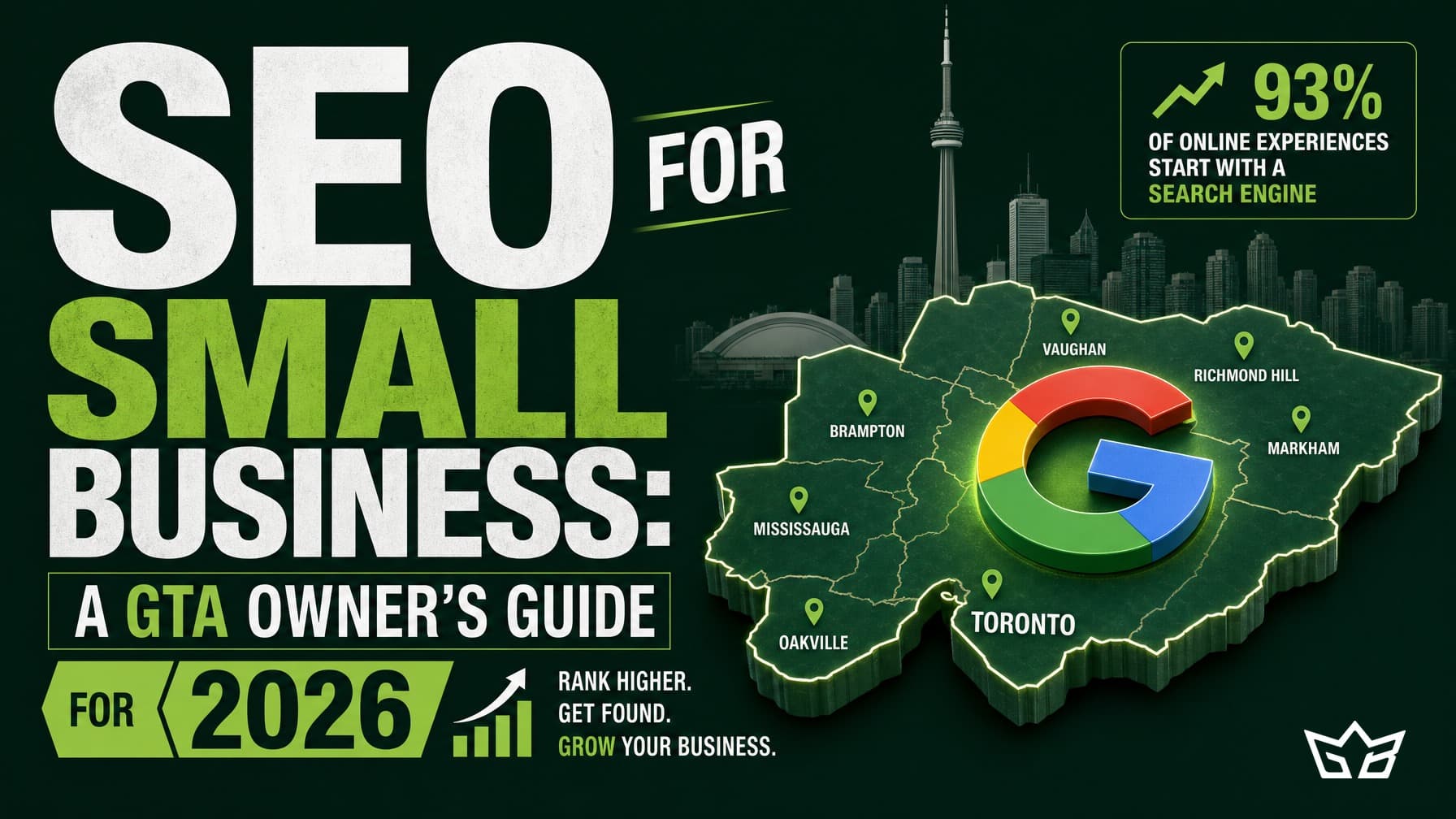
SEO for small business is the ongoing work of getting your business to show up in Google when local customers search for what you sell, so you earn clicks and calls without paying for every one. For most owners in the GTA, that means local SEO first: a complete Google Business Profile, real reviews, and pages that clearly say what you do and where you do it.
This guide walks through what SEO actually does, why local comes first, the pages you need, whether to do it yourself or hire a digital marketing agency for small business, what it costs in CAD, and how to compete in a crowded Toronto market. No jargon, just the plays that work.
What SEO actually does for a small business
Search engine optimization is how you get found in unpaid Google results. When someone types bookkeeper near me or emergency plumber Mississauga, Google decides who shows up. SEO is the set of things you do so that answer is you.
The reason this matters for small business is simple. The people searching already want what you offer. They are not browsing, they are deciding. Ranking well means a steady flow of ready-to-buy visitors you do not pay for per click, month after month. That is the difference between SEO and ads: ads stop the moment you stop paying, while SEO keeps working as long as you maintain it.
Start with local SEO
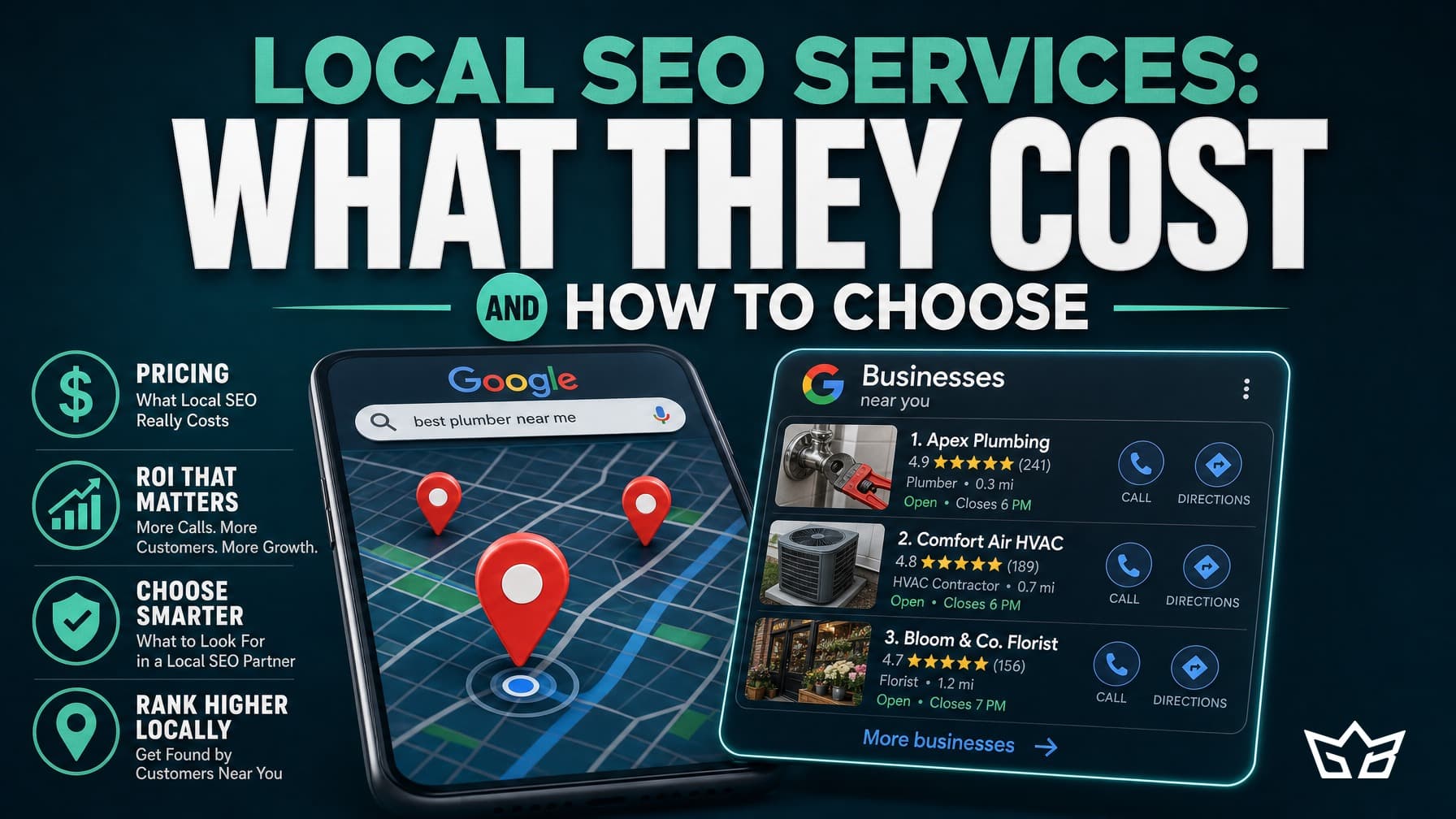
If you serve a specific area, local SEO is where you get the fastest, cheapest wins. Most local searches show a map with three business listings at the top, often called the map pack. Landing there frequently matters more than ranking in the regular blue links below it.
Three things drive local rankings for small business:
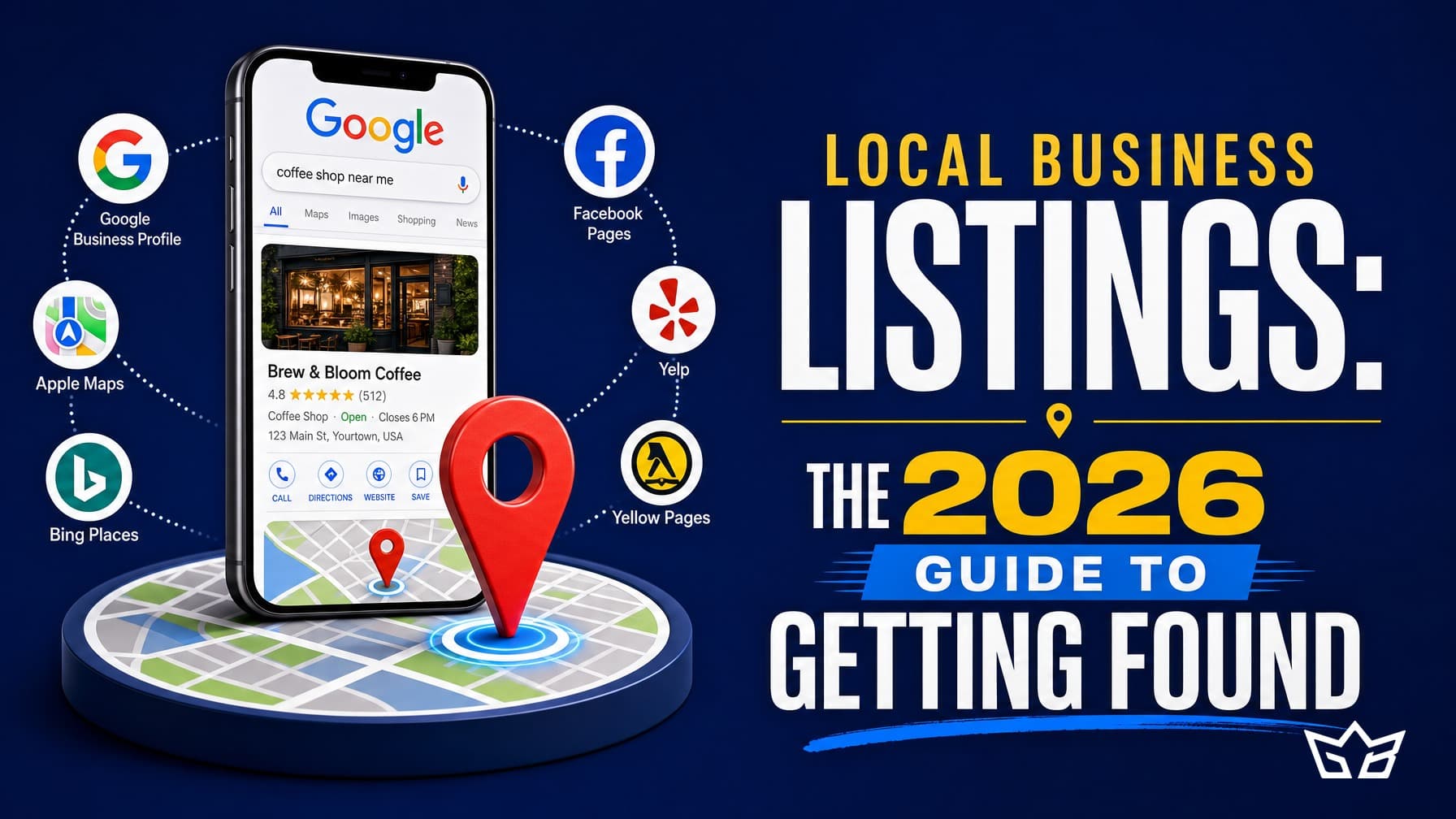
- Your Google Business Profile. Claim it, fill in every field, pick accurate categories, add photos, and post updates. An incomplete profile is the single most common reason a local business is invisible.
- Reviews. Volume, recency, and honest replies all count. Ask every happy customer, make it easy, and respond to the negative ones like an adult.
- Consistent business info. Your name, address, and phone number should match everywhere they appear online, from your site to directories.
Get these right before you spend a dollar on anything fancier. You can check where your local presence stands with our free website audit tool.
The pages every local small business needs
A pretty homepage is not enough. Google ranks pages, not businesses, so you need pages that match how people search.
The core set
- A homepage that states plainly who you help and where.
- A page per service. One page for each thing you sell, not a single list. If you offer roofing and eavestrough cleaning, that is two pages.
- Location pages if you serve multiple areas. A page for each city or neighbourhood you cover, with real detail, not copy-paste text with the town name swapped.
- An about page and a contact page with your address, phone, and hours.
Each page should target one clear search term and answer the question a real person would ask. Write for the customer first and Google second.
DIY or hire an agency
You can do a lot of small business SEO yourself, and for a simple local operation you probably should at first. Managing your Google Business Profile, collecting reviews, and writing straight service pages does not require a specialist.
The case for hiring a small business marketing agency comes down to time and competition. If you are spending evenings fighting with your site instead of running your business, or your competitors clearly outrank you and have outside help, that is the signal. A good agency handles the technical side, the content plan, and the tracking so you can see what is actually working.
If you go the agency route, ask what they will do each month, ask for plain reporting, and avoid anyone guaranteeing rankings. Our website SEO service is built around that kind of clear, monthly work.
What small business SEO costs
Most Canadian small businesses spend between $750 and $3,000 CAD per month with an agency. Local-only campaigns sit at the lower end. Competitive GTA niches, ecommerce, or multi-location businesses run higher because there is simply more to do.
You will also see one-off project fees, usually $1,500 to $6,000 CAD, for things like a technical cleanup or building out a set of service pages. Doing it yourself is not free either: the cost is your time plus a few tool subscriptions. Whatever route you pick, judge it against the value of one new customer. If a client is worth a few thousand dollars a year to you, the math usually works.
SEO is ongoing, not one-and-done
Here is the honest part. SEO is not a project you finish. It is day-to-day maintenance, closer to keeping a garden than building a shed. Google updates its ranking system constantly, your competitors keep publishing and earning links, and your Google Business Profile needs fresh reviews and posts to stay strong.
Stop the work and your gains slide back. Rankings you earned this year get passed by businesses that kept going. This is why a one-time build almost never holds. Plan for continuous effort, whether that is a couple of hours a week from you or a monthly retainer, and treat the first few months as the start of a habit, not a countdown to a finish line.
Competing in the GTA
Toronto and the surrounding cities are among the most competitive local markets in Canada. In dense areas like downtown Toronto, Mississauga, or Brampton, plenty of your competitors already invest in SEO, so the bar is higher. The upside is that most still do it poorly, with thin location pages and ignored profiles.
Your edge as a smaller operator is focus. Own a specific area and a specific service instead of trying to rank for everything across the whole GTA. Get genuinely good at reviews in your neighbourhood. Answer the exact questions your local customers ask. That beats a bigger competitor spreading itself thin every time.
If you want a clear picture of where your site stands and what to fix first, run our free website audit, then get in touch and we will map out a realistic plan for your business.
Frequently asked questions
Is SEO worth it for a small business?
For most small businesses, yes, because the people searching are already looking to buy. A plumber, dentist, or shop that ranks in the local map pack gets a steady stream of calls without paying per click. It takes patience, usually 3 to 6 months to see real movement, so it works best when you can commit for a year or more.
How much does small business SEO cost in Canada?
Most Canadian small businesses spend between $750 and $3,000 CAD per month with an agency, depending on how competitive their market is. Local-only campaigns sit at the lower end, while competitive GTA niches or multi-location businesses run higher. One-off project fees for a technical cleanup or a batch of pages typically range from $1,500 to $6,000 CAD.
How long does SEO take for a small business?
Expect 3 to 6 months for meaningful gains and closer to a year to compete for the harder terms. Local rankings and Google Business Profile results can move faster, sometimes in a few weeks, if your profile was neglected. Anyone promising page one in 30 days is guessing or gaming something that will not last.
Should I do SEO myself or hire an agency?
Do it yourself if you have a few hours a week and a simple local business. Managing your Google Business Profile, asking for reviews, and writing honest service pages is very doable. Hire a small business marketing agency once the work outgrows your time or you are in a crowded market where competitors clearly have help.
Is small business SEO a one-time job or ongoing?
It is ongoing. You can do a one-time cleanup, but rankings are not a trophy you win and keep. Google changes, competitors publish and earn links, and your profile needs fresh reviews and posts. Budget for continuous work, not a single project, or the gains fade.
Reviewed by Keston Leader under our editorial policy.