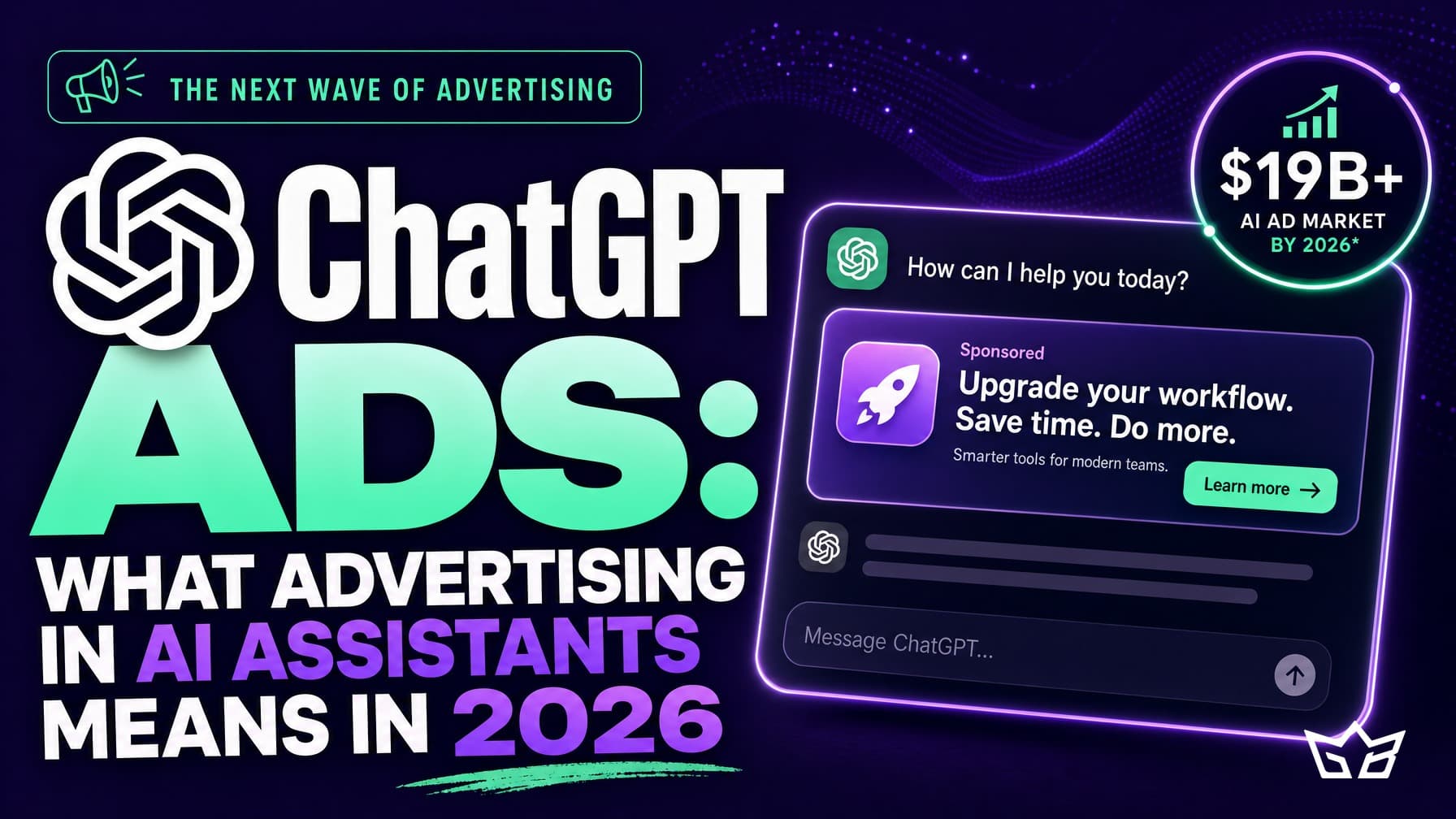
ChatGPT Ads: What Advertising in AI Assistants Means in 2026
You cannot buy a classic pay-per-click slot inside ChatGPT the way you buy Google Ads in 2026. What works now is earning a recommendation inside AI answers through content and structure, not an ad buy.
You cannot buy a classic pay-per-click slot inside ChatGPT the way you buy Google Ads in 2026, at least not at any real scale. What actually moves the needle right now is getting your business recommended inside the answers that ChatGPT and other AI assistants give, and that is earned through content and structure, not bought outright. So the honest version of ChatGPT ads in 2026 is less about ad units and more about being the answer the model reaches for.
Are there really ads in ChatGPT?
There is a lot of noise about advertising on ChatGPT, so here is the plain version. OpenAI has run limited experiments: sponsored suggestions, shopping-style product cards, and a few partner placements in specific markets. None of that is a mature, open auction you can log into and bid on today. If your plan is to wait for a ChatGPT Ads dashboard, you are waiting on a product that is still forming, and you are leaving the free path on the table while you wait.
What is live versus still speculation
It helps to separate what you can act on from what is a headline. Live and usable today: earning organic mentions inside AI answers, feeding search indexes that assistants read, and structured content that models can quote. Being tested in narrow pilots: sponsored answers and product suggestions inside chat. Still speculation: a full keyword-bidding system for ads in ChatGPT with reach like Google. Treat AI search ads as an emerging channel to monitor, not a line item you build your 2026 plan around.
- Real now: getting recommended in AI answers through content and citations.
- Testing: sponsored placements and shopping cards in limited regions.
- Not yet: a self-serve auction for advertising in AI assistants at scale.
Why AI recommendations beat waiting for an ad slot
When someone asks ChatGPT for the best option in your category, the model names a short list. If you are on it, you get a warm recommendation that reads like advice, not an ad. That trust is hard to buy and hard for a competitor to outbid you on overnight. Chasing AI ads that do not exist yet means you miss the window to build that reputation now, while most of your competitors are still confused about how any of this works. Being early to earned visibility is a real advantage.
How brands get visible in AI answers today
The mechanics look a lot like modern SEO with an answer-first twist, often called AEO or GEO. Assistants pull from web content, search indexes, and structured data, so you win by being clearly the best answer to a specific question. Practical steps:
- Write pages that answer real questions directly in the first two sentences, then support them.
- Add structured data (schema) so machines can parse what you do and where.
- Earn citations: reviews, reputable directories, and mentions on sites the models trust.
- Keep your Google Business Profile and location pages accurate for local queries.
This is where our website and SEO work and AI automation overlap: the content and structure that rank you in search are the same signals that get you quoted by an assistant.
How this compares to Google Ads
Google Ads gives you instant, controllable traffic: set a budget, bid, and appear today. The tradeoff is that the moment you stop paying, you disappear, and costs in competitive GTA categories keep climbing. AI recommendations are slower to build but stickier once they land, and they do not charge you per click. The smart 2026 setup is not either-or. Keep paid search running for immediate demand, and build AI visibility in parallel so you are not renting all of your traffic. Think of advertising in AI assistants as the earned layer that lowers your dependence on the paid one over time.
Getting ready for paid AI placements
When real paid units do open up, the brands already recommended organically will have the advantage, because platforms tend to favor entities they already understand. So the prep work for future ads in ChatGPT is the same work that gets you recommended for free today: clean content, strong reviews, accurate data, and a clear category position. Set aside a small test budget for when sponsored placements reach Canada, measure them honestly against your search results, and scale only what pays back. Do not front-load spend on an unproven unit.
AI visibility is earned and maintained
This is the part that gets skipped: AI visibility is not a one-time project you finish. Models retrain, your content ages, and competitors publish new pages every month, so a single push fades within a few months if you stop. This is day-to-day maintenance, closer to going to the gym than to building a fence. You refresh pages, earn new citations, and re-check how assistants answer questions about your category, quarter after quarter. Gains slide back when the work stops. For businesses across Toronto and the wider GTA, that ongoing effort is also a moat: most local competitors are not doing it yet, so consistent maintenance compounds into a lead that is hard to catch.
If you want to be the business ChatGPT recommends in your category, the time to build that is now, before the paid units mature. See how we approach AI visibility, then get in touch and we will map the content and structure work that gets you named in AI answers.
Frequently asked questions
Can you run ads on ChatGPT?
For most businesses, no, not as a self-serve ad platform in 2026. OpenAI has tested limited sponsored placements and shopping-style suggestions, but there is no open auction where you bid on keywords the way you do in Google Ads. The reliable path right now is earning your way into the recommendations ChatGPT already gives.
Does ChatGPT have advertising?
Partly. ChatGPT is experimenting with sponsored results and product suggestions in some markets, but advertising in ChatGPT is early and not broadly available to buy. Assume most of your visibility comes from organic recommendations, and treat any paid unit as a small test when it opens up.
How do I get my business recommended by ChatGPT?
Publish clear pages that answer real questions, add structured data, and build citations across sites the models trust (reviews, directories, mentions). ChatGPT pulls from web content and search indexes, so the same signals that help you rank in search help you get named in answers. In the GTA, that includes local pages, Google Business Profile, and reviews. Expect 3 to 6 months before it shows up consistently.
Are AI ads worth it in 2026?
Paid AI ad units are worth a small test budget once they reach your market, but they are not where most of your spend should go yet. In 2026 the better return usually comes from AEO and GEO work that gets you recommended for free. Watch the paid products, but do not wait for them.
Is AI visibility a one-time setup or ongoing?
Ongoing. Models retrain, competitors publish, and your content ages, so a one-time push fades within months. Plan for continuous work: refreshing pages, earning new citations, and checking how assistants answer questions about your category. Budget for it like SEO, not like a single project.
Reviewed by Keston Leader under our editorial policy.