Online Reputation Management: A 2026 Guide for Businesses
Online reputation management is the ongoing work of monitoring, earning, and responding to reviews and search results so what people find about your business online matches the truth and helps them buy.
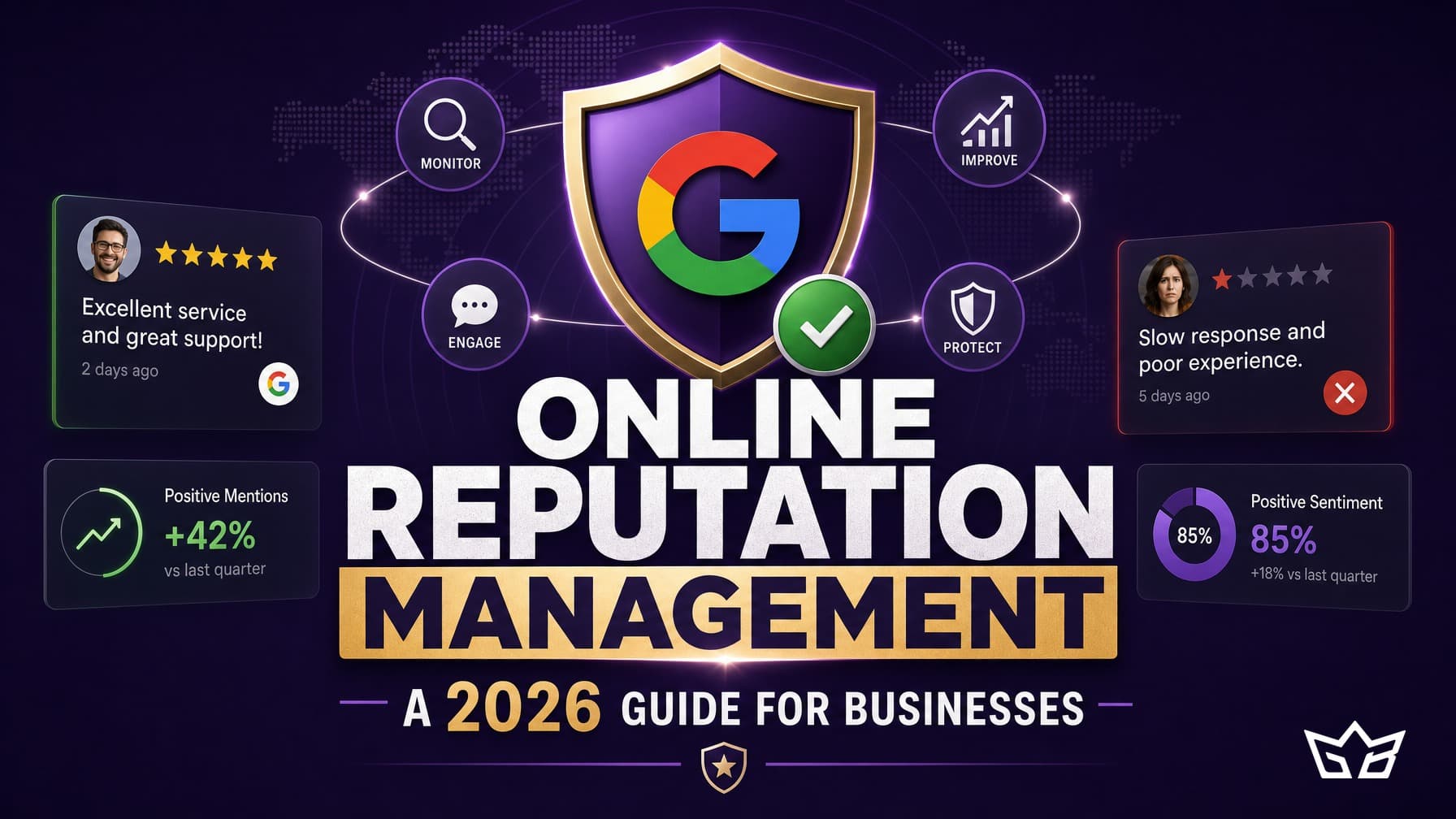
Online reputation management (ORM) is the ongoing work of monitoring what people find about your business online and shaping it so it reflects reality. In practice that means watching your reviews, the search results for your brand name, and social mentions, then steadily earning good reviews and answering the ones that go wrong. Done well, it means a prospect who Googles you finds an honest, current picture instead of a stale complaint from three years ago.
Most owners treat reputation as something they deal with only after a bad review shows up. By then you are reacting under pressure. The better approach is to manage online reputation as a quiet weekly routine, so the good outweighs the bad long before anyone goes looking.
What online reputation management is
ORM covers three connected things: your reviews, what ranks on the first page of Google for your business name, and how people talk about you on social platforms and forums. Reputation management pulls those together into one habit. You are not spinning the truth or hiding problems. You are making sure the accurate, positive parts of your story are visible and that the negative parts get a fair, public response.
It sits close to your other marketing. Strong reviews feed your local search rankings, and a clean brand search supports every ad and referral you run. That is why reputation and SEO are usually handled together rather than in separate silos.
Why your reviews and search results decide sales
People check you out before they contact you. They read your Google rating, skim a few reviews, and glance at the first page of results for your name. Most of that happens in under a minute, and it happens before you get a chance to say a word. A 4.7 star profile with recent, detailed reviews earns the call. A 3.9 with two angry complaints on top loses it, even if your work is excellent.
Search results matter just as much. If page one for your brand name shows your site, your Google profile, and a couple of positive third-party pages, you look established. If it shows an old dispute or a competitor comparison that trashes you, that becomes the first impression. Your business reputation online is whatever a stranger can assemble in sixty seconds.
Monitoring your reputation
You cannot manage what you do not see. Set up a few simple watchpoints so nothing surprises you:
- Google Business Profile, checked for new reviews at least weekly.
- The main review sites your industry uses, whether that is Yelp, industry directories, or app store listings.
- A Google Alert (or a paid tool) for your business name and the owner name.
- A monthly incognito search of your brand name to see the real first page a prospect sees.
The point is speed. A complaint you answer within two days reads as attentive. The same complaint sitting unanswered for a month reads as neglect.
Earning reviews the right way
The most reliable way to manage online reviews is to earn a steady stream of honest ones. Ask every satisfied customer, right after you have done good work, when they are happiest. Make it easy with a direct link to your Google review form in a follow-up text or email. A short, plain ask works better than a clever campaign.
Do not buy reviews, do not pay for positive ones, and do not offer discounts in exchange for a five star rating. Google actively removes fake reviews and can suspend profiles that game the system, so the shortcut costs you more than it earns. A small, consistent flow of genuine reviews beats a suspicious spike every time, and it keeps your rating current, which both customers and the local ranking reward.
Responding to reviews, good and bad
Reply to reviews, all of them. For positive ones, a brief, specific thank you shows you are paying attention. For negative ones, the response is really for the next reader, not the upset customer. Keep it calm: thank them, acknowledge the specific problem, and offer to fix it offline with a name and a way to reach you.
Never argue, never get defensive, and never share private details in a public reply. A measured answer to a harsh review often does more for you than the review does against you, because it proves how you handle problems. Prospects expect the occasional bad review. What they are really judging is your response.
Shaping what ranks for your brand
You have more control over your brand search results than most owners assume. Publishing useful content, keeping your profiles current, and earning links and mentions all push the pages you want onto page one and press the ones you do not further down. This is steady SEO work applied to your own name, and it pairs naturally with broader growth marketing that builds authority over time.
For Toronto and GTA businesses, local signals carry extra weight. Your Google Business Profile, reviews that mention neighbourhoods and services, and citations across Canadian directories all feed local rankings. A strong local profile often does more for a GTA service business than any amount of national content.
Reputation is continuous work
Here is the honest part. Reputation management is not a one-time cleanup you finish and forget. You can scrub an old result or recover from a rough month, but new reviews, comments, and search results appear every single week. The rating you worked to reach drifts down the moment you stop asking for reviews, and unanswered complaints pile back up. It is day-to-day maintenance, not a project with an end date, and the gains slide back if you walk away. Budget for it as an ongoing line item, whether that is an hour of your own time each week or an agency retainer.
If your reviews and brand search need attention, we can set up the monitoring, the review habit, and the SEO to shape what ranks. See our SEO services or get in touch to talk through where your reputation stands today.
Frequently asked questions
What is online reputation management?
Online reputation management (ORM) is the practice of monitoring and shaping what people find about your business online. That includes reviews on Google and industry sites, the first page of search results for your name, and mentions on social media. The goal is simple: make sure what shows up is accurate and reflects the real quality of your work.
How do I manage my business reputation online?
Start by claiming your Google Business Profile and every review site your customers use. Set up alerts for your business name so you see new mentions fast. Then build a steady habit of asking happy customers for reviews and replying to every review within a few days. Most owners spend 30 to 60 minutes a week on this, or hand it to an agency for roughly $500 to $2,000 CAD a month.
How do I get more Google reviews?
Ask every satisfied customer directly, right after you have delivered good work, when the experience is fresh. Send a short follow-up email or text with a direct link to your Google review form. Never buy reviews or offer discounts for positive ones, since Google removes fake reviews and can suspend your profile. A simple, consistent ask usually lifts your review count more than any trick.
Should you respond to negative reviews?
Yes, respond to negative reviews, and do it calmly and in public. Thank the person, acknowledge the specific issue, and offer to make it right offline. Future customers read your replies more than the complaint itself, so a professional answer often does more good than the bad review did harm. Never argue or get defensive in the reply.
Is reputation management a one-time fix or ongoing?
It is ongoing. You can clean up a bad search result or a batch of old reviews once, but new reviews, comments, and search results appear every week. If you stop monitoring and stop asking for reviews, your rating drifts down and negative content resurfaces. Treat it as a weekly habit, not a project with an end date.
Reviewed by Bahaa Zuraik under our editorial policy.