PPC Management in Toronto: Real Costs for 2026
What PPC management costs in Toronto in 2026, real cost-per-click ranges by industry, and the Google automation shift that changed what you pay for.
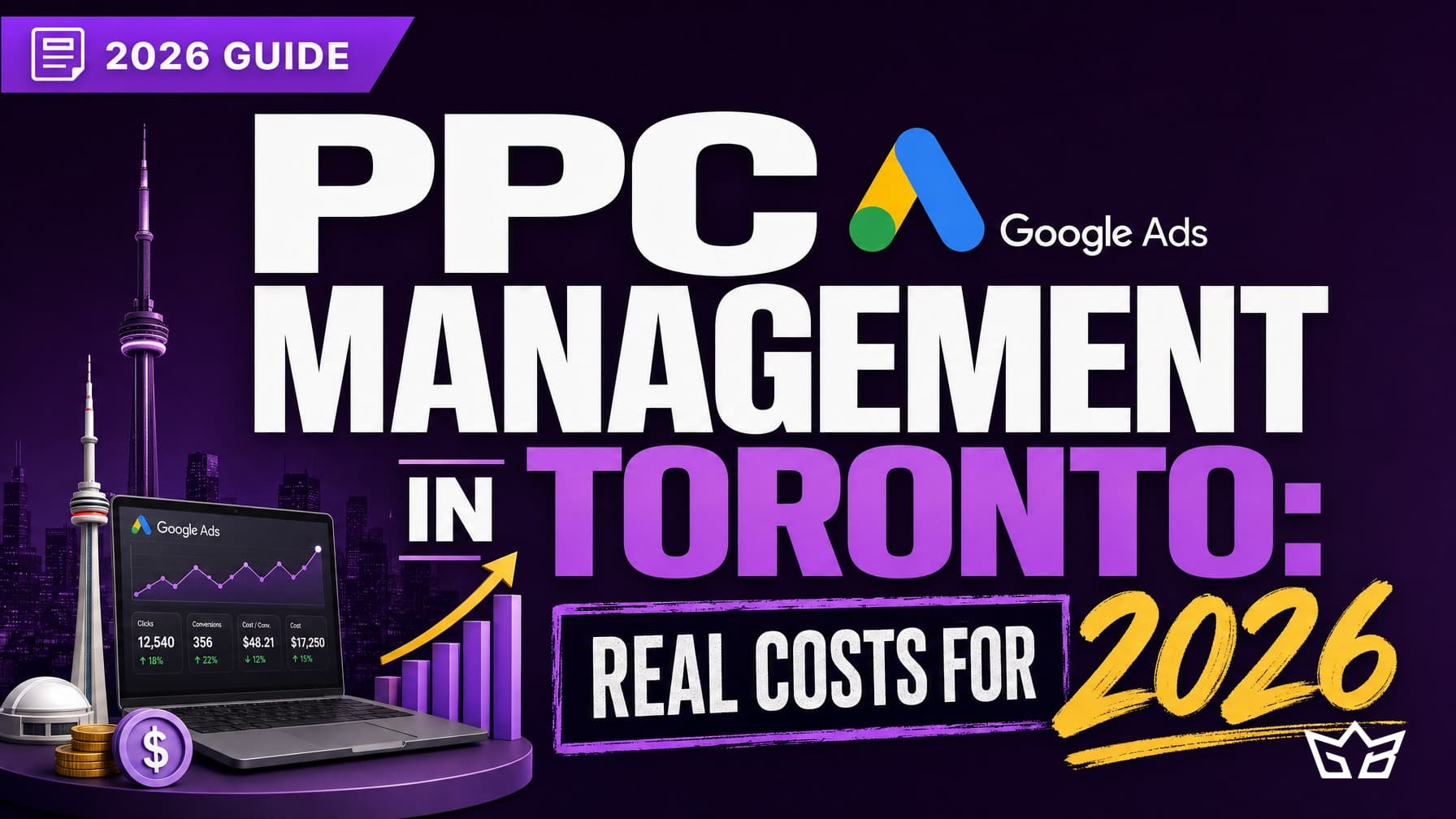
Toronto is the most expensive place in Canada to buy a click, and 2026 is the year the job of managing those clicks changed completely. Most of the agencies selling PPC management in Toronto are still billing for work Google now does automatically.
That is a blunt thing to open with, so here is the evidence.
Across more than 13,000 search campaigns measured between April 2025 and March 2026, the all-industry average cost per click landed at 5.42 dollars, with a 6.64% click-through rate, an 8.18% conversion rate, and a 66.69 dollar cost per lead. Those are the global averages. Toronto sits well above them on almost every commercial term, because this is where every national advertiser competes for the same inventory.
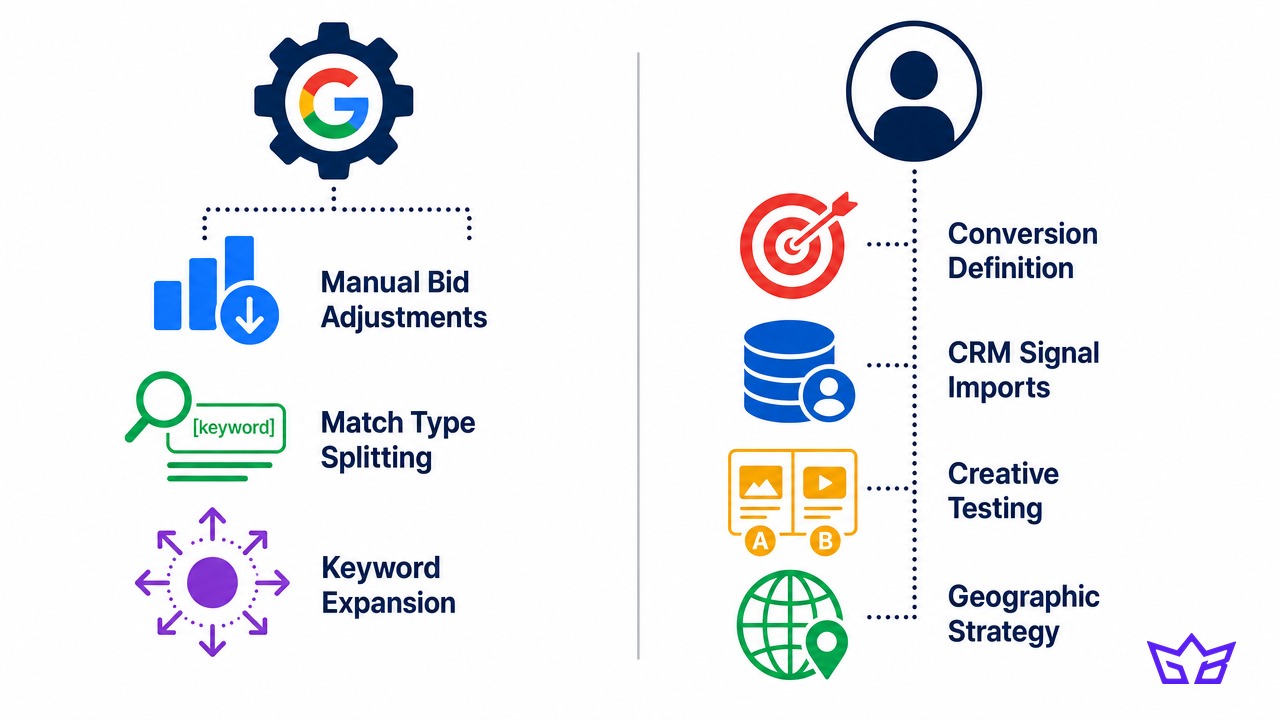
Meanwhile, Google spent the last twelve months automating the exact tasks that used to justify a management retainer. Bid adjustments, match type splitting, and query mining are now machine work. If your agency's monthly report still leads with "we optimized bids," you are paying a person to watch an algorithm.
What a Click Actually Costs in Toronto
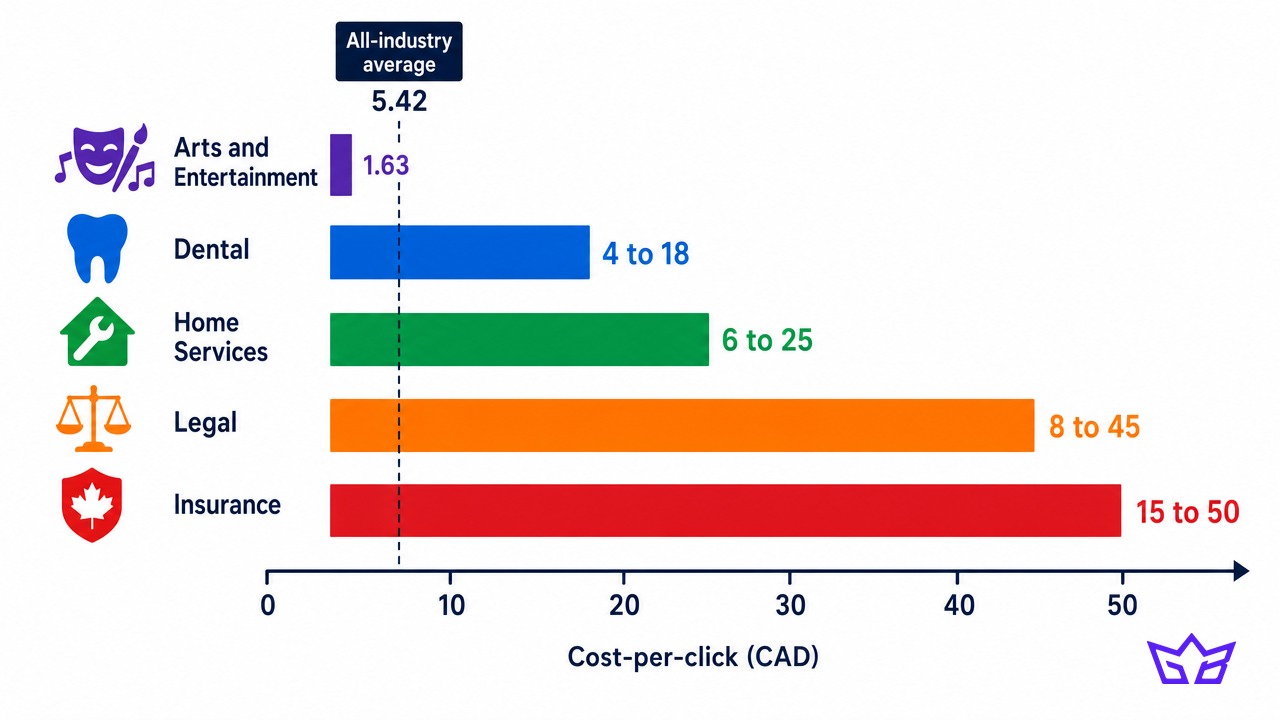
National averages are useless for budgeting because the spread between industries is enormous. Across 2026 benchmark data the range runs from about 1.63 dollars in arts and entertainment to 9.87 dollars in legal services, and that is before you apply a Toronto premium.
Here is where Canadian costs actually land, and Toronto consistently sits at the top of each of these bands:
- Legal: 8 to 45+ dollars per click. Personal injury in Toronto is the single most expensive category in the country.
- Insurance: 15 to 50+ dollars, highest in major urban markets.
- Home services including HVAC, plumbing, and contracting: 6 to 25 dollars, driven by market saturation.
- Dental: 4 to 18 dollars, with Toronto at the upper end.
- Real estate: 3 to 12 dollars residential, 15 to 40 dollars commercial.
- B2B SaaS: 4 to 30+ dollars depending on how contested the category is.
Read those numbers next to a budget and the math gets uncomfortable fast. A Toronto personal injury firm paying 40 dollars a click with a 5% conversion rate is spending 800 dollars per lead before anyone answers the phone. A dental practice at 12 dollars a click and a 10% conversion rate is at 120 dollars per lead.
Neither of those is automatically bad. They are only bad if you do not know the number. The single most common failure we find in Toronto ad accounts is not bad targeting. It is an owner who cannot tell you their cost per qualified lead. Without that figure every other decision is guesswork dressed up as strategy.
The Google Ads Job Changed in 2026, and Most Agencies Have Not Caught Up
This is the part worth understanding before you sign anything, because it determines what you should be paying for.
Google's automation layer for search campaigns, AI Max, moved out of beta this year with stronger targeting and creative controls. Since September, campaigns using automatically created assets or campaign-level broad match upgrade into AI Max automatically, and Dynamic Search Ads follow in February 2027. Performance Max got real upgrades too: asset group level reporting, channel level budget transparency, better placement exclusions, and campaign level negative keywords.
Put plainly, Google's AI now decides which channels get your budget, shifting spend between Search, Shopping, Display, YouTube, Discover, Gmail, and Maps in real time based on what is converting.
So the scarce skill is no longer pulling levers. Google pulls them whether you help or not. What the automation genuinely cannot do on its own:
- Define what a good conversion is for your business. Google optimizes toward whatever you tell it to value. Tell it to value form fills and it will find you people who fill in forms, including the tire-kickers and the job applicants.
- Import qualified-lead and revenue signals from a CRM you have not connected. This is where the biggest gains in paid search sit right now, and it is the most commonly skipped.
- Write offers and creative that a human wants to click. Asset quality is now a bigger lever than bid strategy, because the bidding is settled.
- Decide what not to advertise. Cutting a losing service line or a bad geography is a judgment call, and automation will happily spend your budget optimizing a campaign that should not exist.
- Connect paid results to the rest of the funnel. If your landing page is slow or your form is eight fields long, no bid strategy saves it.
We wrote about how this plays out for lead gen specifically in our breakdown of running Performance Max for B2B lead generation, and the conclusion was the same: the account settings matter less than the signal you feed them.
What PPC Management in Toronto Should Cost
Real numbers, since almost nobody publishes these.
PPC management in Toronto generally runs 800 to 3,000+ dollars a month in fees, depending on the pricing model, campaign complexity, and how many service lines you are running. Most Canadian small businesses put 1,000 to 5,000 dollars a month into actual ad spend on top of that.
The three fee models you will be quoted, and what each one really means:
Percentage of spend, typically 10% to 20%. Spend 10,000 dollars, pay 1,500 to 2,000 dollars. Simple and common. The structural problem is obvious once you say it out loud: your agency earns more when you spend more, which is not always what you need. Good agencies manage this honestly. Ask directly what happens to their fee if they recommend cutting your budget.
Flat monthly retainer, usually 1,000 to 3,000 dollars. Predictable, and the incentive is cleaner because the fee does not rise with spend. Watch for the opposite failure: a flat fee on a small account can quietly become a subscription for a monthly report.
Performance based, or a hybrid. Attractive in theory. In practice, attribution arguments are where these relationships die. If you go this route, agree in writing on what counts as a conversion and which tool is the source of truth, before month one.
For a business spending under about 2,000 dollars a month on ads, a 1,500 dollar management fee makes no sense. You would be paying nearly as much for management as for media. At that level, either raise the budget so management pays for itself or run it in-house with a proper structure. We laid out how to make small budgets work in running Google Ads on a small budget.
What Good Toronto PPC Management Actually Delivers Now
If bidding is automated, what are you buying? Five things, and you should be able to see all five in a monthly report.
Conversion architecture. Offline conversion imports wired up, qualified leads fed back into Google, values assigned to different lead types. This is the work that separates accounts that improve from accounts that plateau.
Geographic discipline. Toronto is not one market. Downtown, North York, Scarborough, Etobicoke, and the 905 behave differently on cost and intent. A campaign averaging across all of them hides both the winners and the money pits.
Query and placement hygiene. Automation broadens reach, which is exactly the point, and it also means your ads will show against queries you would never choose. Someone has to read the search terms report and prune it every week.
Creative and offer testing. Asset quality now drives more of the outcome than bid tuning ever did. That means new headlines, new landing page variants, and real offers, not the same three ads running for eight months.
Landing page and speed work. Paid traffic hitting a slow page is a tax you pay on every click. This is where paid and web performance stop being separate projects, which is why our growth and marketing engagements treat them as one.
Red Flags When Hiring a Toronto PPC Agency
Six things that should end the conversation.
They will not give you admin access to your own Google Ads account. Non-negotiable. The account should be in your name, on your billing, with them added as a user. Agencies that keep accounts hostage do it for a reason.
The report leads with impressions and clicks. Those are inputs. Leads, cost per qualified lead, and revenue are outcomes. A report full of inputs is usually hiding weak outcomes.
They promise a specific position or a guaranteed cost per click. Nobody controls the auction. Anyone claiming otherwise is either misinformed or counting on you being.
No mention of conversion tracking in the proposal. If offline conversion imports and CRM connection are not in the scope, they are planning to optimize toward form fills and hope for the best.
They cannot explain what AI Max changes for your account. It has been absorbing broad match campaigns since September and takes over Dynamic Search Ads in February 2027 (what to do before the AI Max switch). An agency that has not raised this with you is not paying attention to the platform they charge you to operate.
One campaign for everything. A single campaign covering every service and all of the GTA is the signature of an account nobody is really managing.
Common Questions
How much should a Toronto business budget for Google Ads? Work backwards from your numbers instead of picking a round figure. Take your average customer value, multiply by your close rate on paid leads, and that tells you what you can afford per lead. Then divide by your expected conversion rate to get your affordable cost per click. If that number is below the going rate for your industry in Toronto, paid search is not your channel yet, and knowing that early is worth more than a test that burns 6,000 dollars proving it.
Is PPC or SEO better for a Toronto business? Different jobs. Paid buys you an answer in two weeks and stops the moment you stop paying. Organic compounds and takes three to six months to matter. Most Toronto businesses we work with need paid to validate which offers and keywords actually convert, then organic to own those terms cheaply. Running paid first to inform the SEO plan is usually the cheaper sequence.
Do I need an agency, or can I run this myself? Under roughly 2,000 dollars a month in spend, in-house with a decent structure often nets more than paying a retainer that eats the media budget. Above about 5,000 dollars a month, the conversion tracking and CRM integration work is genuinely specialized and worth outsourcing. The awkward middle is where you should be most sceptical of a proposal.
Why did my costs go up without anything changing? Usually one of three things: a competitor entered your auction, your Quality Score slipped because your landing page got slower, or an automated campaign type broadened your reach into more expensive queries. The search terms report and your page speed will tell you which within an hour.
What is a realistic timeline before Google Ads works? Two to four weeks for data, six to eight weeks for the conversion signal to be trustworthy enough for automation to optimize against, and about three months before you can judge the channel fairly. Judging an account in week two is how good campaigns get killed early.
Where to Start This Week
Open your Google Ads account and find one number: cost per conversion, filtered to the last 90 days, segmented by campaign.
Then ask a harder question about that number. Of those conversions, how many became actual customers? If you cannot answer, that is your project, and it is a bigger lever than any bid strategy. Connecting your CRM back to Google so it learns what a real customer looks like is the highest-return work available in a Toronto ad account in 2026, and it is what the automation cannot do for you.
If you want a straight read on whether your current spend is working, we do a free look at Toronto accounts: what you are paying per qualified lead, where the budget is leaking, and whether an agency is billing you for work Google now does on its own. Send us your numbers and we will tell you what we would change first.
Reviewed by Bahaa Zuraik under our editorial policy.